
Sciatica Treatment in Toronto
Sciatica can be painful, frustrating, and sometimes a little frightening—especially when pain that started in your lower back or buttock begins travelling into your leg.
You may also notice tingling, numbness, burning, weakness, or simply that the leg doesn’t feel quite right.
The first question isn’t necessarily “What treatment do I need?”
It’s “What’s causing this?”
At Toronto Neck and Back Pain Clinic, we assess back and leg pain to help determine what may be irritating the nerve, whether chiropractic care is appropriate, and whether another type of care or further investigation may be warranted.
Same-day appointments and walk-ins are available.
What Is Sciatica?
Sciatica describes symptoms associated with irritation or compression involving the nerves that form the sciatic nerve.
Symptoms commonly affect one side and may include:
- lower back or buttock pain;
- pain travelling into the thigh, calf or foot;
- tingling or pins and needles;
- numbness;
- burning or electric-like pain;
- weakness or changes in how the leg or foot functions.
Importantly, not every pain that travels into the leg is sciatica. Muscles, joints and other structures can sometimes produce similar symptoms. That’s one reason a proper assessment matters.
What Can Cause Sciatica?
Sciatica can occur for different reasons. A lumbar disc bulge or herniation is one possibility, but degenerative changes, narrowing around a nerve, inflammation or other mechanical problems may also contribute.
And sometimes what feels like “sciatica” turns out to be something else.
Rather than assuming the cause from the symptom alone, we look at the history, how you move and function, neurological findings where appropriate, and the overall clinical picture.
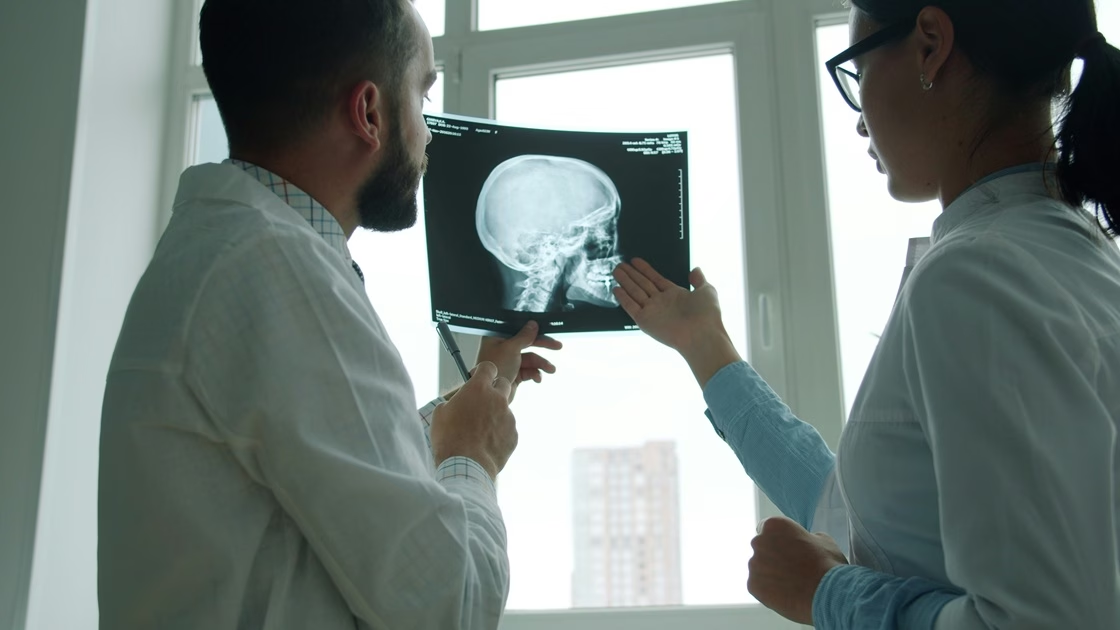
Do I Need an X-Ray or MRI?
Not everyone with sciatica needs imaging.
Your history and examination often provide considerable information about what may be happening. Imaging or medical assessment may be appropriate when the findings suggest it, when symptoms aren’t progressing as expected, or when further investigation could change how the problem should be managed.
If we believe another assessment or type of care is warranted, we’ll tell you.
Can Chiropractic Care Help Sciatica?
Chiropractic care may be an appropriate conservative treatment option for some people with back pain and leg pain or sciatica, depending on the cause and examination findings.
Care at our clinic is based on the individual rather than simply applying the same treatment to everyone with the word “sciatica.”
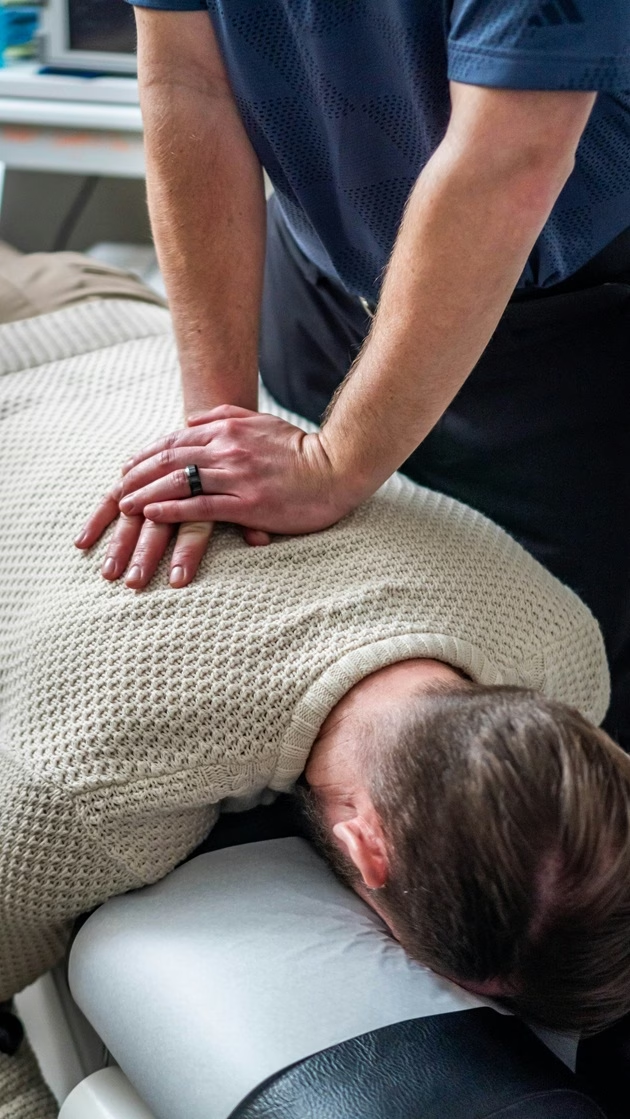
Treatment may include chiropractic adjustments or other manual treatment, appropriate soft-tissue work, movement or exercise recommendations, and practical advice about activity and recovery.
The goal is to help reduce pain, improve movement and function, and help you get back to the activities that matter to you.
What If Chiropractic Isn’t All I Need?
Sometimes another approach can add value.
Physiotherapy, massage therapy, acupuncture, medical assessment, diagnostic imaging or another opinion may be appropriate depending on the problem.
We regularly work with and refer to other healthcare practitioners when warranted.
Having more treatment isn’t automatically better. The aim is to use the care you need, and add something else when there’s a good reason to do so.
No Unnecessary Treatments or Long-Term Plans
Our approach is deliberately straightforward.
We don’t use unnecessary treatments, therapies or long-term treatment plans simply because they are available.
We assess the problem, provide appropriate care, monitor how you’re responding, and adjust the approach accordingly.
When Should Sciatica Be Assessed Urgently?
Most back and leg pain isn’t a medical emergency, but certain symptoms warrant prompt medical attention.
Seek urgent medical assessment for symptoms such as new loss of bowel or bladder control, numbness around the groin or saddle area, significant or rapidly worsening weakness, or other severe or unusual symptoms that concern you.
What Does a First Visit Cost?
A new-patient visit is $47 and includes consultation, examination and treatment when appropriate.
Regular treatment visits are $50.
There are no contracts or prepaid long-term treatment plans.
Sciatica Care at Yonge & Davisville
Toronto Neck and Back Pain Clinic is located at:
1849 Yonge Street, Suite 412
Toronto, Ontario M4S 1Y2
We’re conveniently located near Yonge and Davisville in Midtown Toronto.
Same-day appointments are available and walk-ins are welcome.
You can book online or call 416-960-9355. Our phones are answered 24 hours a day.
Frequently Asked Questions
Should I see a chiropractor or physiotherapist for sciatica?
It depends on what’s causing your symptoms and what you need. Both professions may play a role in conservative musculoskeletal care. An assessment can help determine what appears to be contributing to the problem and which approach—or combination of approaches—is appropriate.
Do I need an MRI for sciatica?
Not necessarily. Many cases can initially be assessed clinically. Imaging may become appropriate when particular examination findings, significant neurological symptoms, trauma, persistent symptoms or other concerns warrant further investigation.
Can a herniated disc cause sciatica?
Yes. A lumbar disc bulge or herniation can irritate or compress a nerve root and produce pain, tingling, numbness or weakness into the leg. But disc problems aren’t the only possible cause of sciatica-like symptoms.
Should I rest when I have sciatica?
Some activities may need to be modified temporarily, particularly when they clearly aggravate symptoms. Complete prolonged inactivity, however, isn’t automatically the answer. Appropriate movement and activity recommendations should depend on your individual presentation.
How long does sciatica take to get better?
There isn’t one timetable that applies to everyone. The cause, severity, duration of symptoms, neurological involvement, general health, activity demands and response to care can all influence recovery.